Calm-morning skills block
Practice assisted rescues when water is flat; save rougher days for mileage you already earned.

Northern lakes reward paddlers who read the surface, respect swimmers and anglers, and keep launches tidy for the next crew. Build a simple ramp routine you can repeat every time so rigging does not steal daylight from the water.
At the ramp
Arrive with straps already adjusted loosely enough to lift the boat but not so loose that it shifts on the roof. Park out of the rigging lane if you still need ten minutes of organisation. On busy evenings, treat the concrete like a kitchen: keep bags tight to your vehicle, do not sprawl dry bags across the only flat space someone else needs for a wheelchair transfer or a cart.
Before the hull touches water, confirm PFD buckles, footbrace settings, and that your sponge or bilge tool is reachable without performing yoga. If you paddle with a leash on a board, understand what it connects to and what snag risks exist near docks. Leashes are not universally appropriate; match equipment to conditions you actually understand.
On the water, give swimmers and anglers a wide berth. If you need to pass close for safety, pass smoothly without stopping in their line unless you are communicating calmly. Waves echo off rock walls; a playful sprint near a cliff can send unexpected rollers toward a beginner fifteen seconds later.
Wind on the water
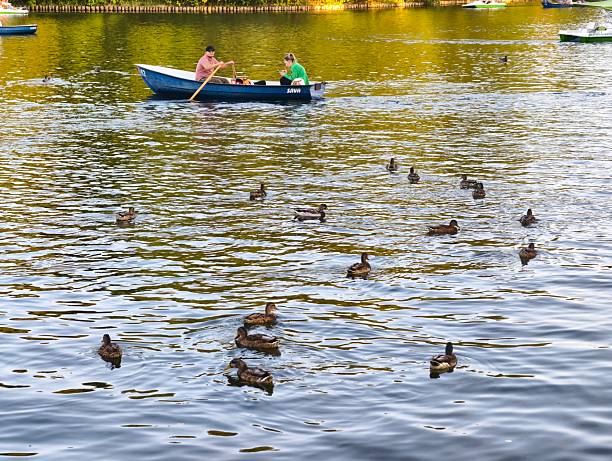
Look at the water surface in three bands: near shore, mid-lake, and far horizon. If mid-lake looks darker and faster while near shore looks confused, you may be seeing shear that is annoying for beginners even if the numeric wind speed seems moderate. If whitecaps appear only in one corridor, consider shaping your route to use shoreline shelter for the return leg when you are more tired.
Thunderstorms deserve blunt respect. If convection is on the menu, shorten the day. Metal vehicles are shelter; open water is not.
Cold water realism
Cold water reduces margin for error. Dress for the water temperature you might realistically be in during an unexpected swim, not only for the air temperature that feels fine while dry. That phrase is common in paddling communities because it is practical, not because it predicts what will happen to you personally.
Carry a whistle, a visible hat colour, and a plan for getting warm after exit: loose jacket, dry base layer, and a thermos you can open with tired hands. If someone shivers heavily, prioritise shelter, dry clothes, and warm drinks while seeking professional help if symptoms worry you. This site does not triage medical situations.
Alcohol and paddling do not mix well with balance, judgment, or group coordination. Save celebratory drinks for after boats are fully secured.
Meetups
Club demo days are underrated classrooms. You can compare how different hulls track in the same small bay, which is more informative than reading adjectives online. Respect demo staff time by rinsing feet before stepping into borrowed boats and by following their requested routes.
Cleanup floats combine litter pickup with gentle mileage. Bring gloves you do not mind staining, and separate sharp metal into a rigid container. If an event provides bags, still carry your own small sack as backup.
Practice assisted rescues when water is flat; save rougher days for mileage you already earned.
Learn to dry skirts and hulls properly to avoid mould without overheating plastics.
On the water
Depends on water temperature and your skills. Many paddlers use layered solutions; the goal is realistic immersion protection you have actually practised in.
Use zoom, avoid chasing, and never block a bird’s exit path to water. If animals change behaviour because of you, you are too close.
Choose a shorter loop or swap leaders so nobody feels pressured to sprint. Smooth, quiet strokes save energy and reduce waves for others.
If you are mixing a paddle morning with an afternoon ride, the bikepacking guide talks about securing wet gear away from brake surfaces.